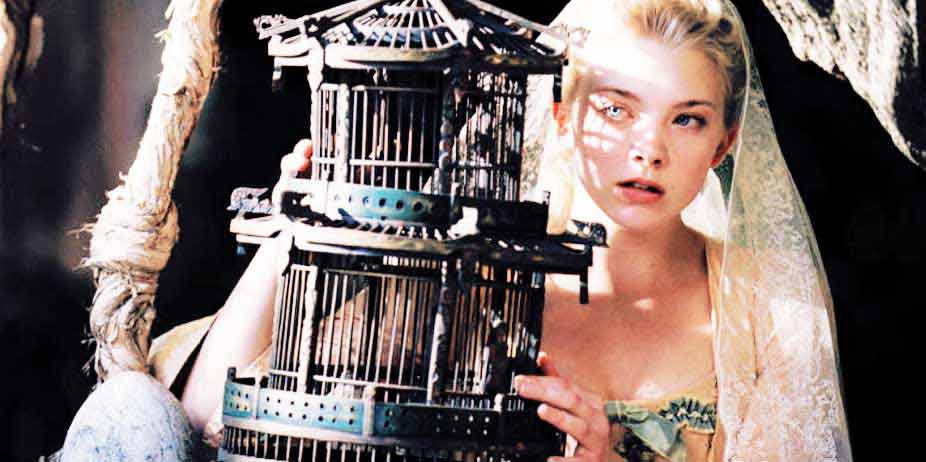
Casanova (2005)
When I first heard about this film I was convinced that it would be sexually explicit and bawdy, but it was cute enough that the trailers drew me in. Casanova is the story of a notorious womanizer who attempts to win the heart of a virtuous girl, but it was much less disgusting than I anticipated. It was actually an enjoyable way to spend the afternoon.
There are few virtuous woman in Venice, and the problem is attributed to Casanova (Heath Ledger), a ladies man whose personal goal is to seduce as many women as possible in an endless pursuit of pleasure while awaiting the return of his long-lost mother, who when she departed with an acting troupe in his childhood, promised to come back for him one day. Caught in the bedchamber of a nun in a convent well-acquainted with his crimes, Casanova flees the judicial authorities of the church and inadvertently drops into the middle of a political debate in the local college. The topic is whether or not a woman's place is to gain an education. The strongest voice of opposition is found in the form of Francesca Bruni (Sienna Miller), a local voice for female politics and one of Casanova's most outspoken critics. Casanova is smitten with her but, once captured by the police, informed that he must settle down with a respectable woman at once or risk being prosecuted.
Thus he goes after the most virginal woman in Venice, Victoria (Natalie Dormer). The temperate girl is smitten and persuades her disapproving father to approve of the match. But across the canal lies a man madly in love with her. Francesca's brother Giovanni (Charlie Cox) becomes affronted by the engagement and challenges Casanova to a duel. Francesca and Casanova, under the guise of a different man entirely, are thrown together and, believing himself to be truly in love for the first time, the flighty young man determines to win her over. In the meanwhile, he must contend with suspicions that she has a lover, a secret writer of propaganda that the church considers heresy, her overweight fiance (Oliver Platt) and the intimidating Inquisitor from Rome (Jeremy Irons). For two hours the audience is treated to a lavish spectacle of gorgeous costuming and truly amusing incidents in the life of Casanova, who undertakes numerous personalities and becomes involves in too many adventures to count.
The film never lets up pace from the first instant to the final shot and is genuinely romantic, something that would seem difficult given that the "hero" is a philanderer. Even though the audience is morally aware that yes, he does seduce women, we're asked to accept that he loves Francesca ... and we accept it. There are actually some good points made about romantic love. Casanova attempts to justify his behavior and she'll have none of it, stating that love is meant to exist between two people bound to one another for eternity. There are several different romances going on during the course of the film, and it has some truly unexpected twists. The production was beautiful and the acting sublime. I expected there to be much more smut than there turned out to be. There are the customary innuendos and coy references to sex. Casanova in the opening scene is observed seducing and bedding a nun (the shot of them in bed is brief but graphic), then as he flees other nuns along the corridor call out his name longingly. He is seen kissing other women, some of them married, in the same montage. Victoria seems innocent but turns out to be a scheming temptress altogether too familiar with sexuality. The only truly bawdy and offensive scene in the film has her performing a sexual act on Casanova under a table while he attempts to hold conversation with his companions (implied).
Giovanni visits a house of prostitution and is seen in a bed full of women. A young man takes up where Casanova left off, adding "further adventures" to his book of sultry stories. Language is mild with one use of "whore," "b****rd," and a couple mild profanities and abuses of deity. There is some violence as soldiers attack townspeople and a man is tortured on the rack. Religion does play a part in the film but I never found it particularly offensive. The Inquisitor comes to make an example of Casanova and is shown pursing many morally corrupt avenues in order to catch his man (including torture, and the sending away of various former religious officials to cannibal-invested territories as punishment).
While I do not like philanderers and womanizers, I found Casanova to be rather charming most of the time. The presence of his heroine was wonderful, since she was portrayed as a feminist without becoming a modern feminist; she was an ideal feminist of her time, a historical inaccuracy that too many other films make. True, there is very little redeeming value but I found it enjoyable.