The Count of Monte Cristo (2002)
Alexander Dumas penned many classic sword-swinging adventures. The best known of these is The Count of Monte Cristo. Those who have read the book will find only vague resemblances to characters and plot twists in this adaptation. It's received praise from many Christian reviewers but my notes come with a grain of salt... since I see the fatal flaw for what it is: modern morals and philosophies. The film begins with lifelong friends Edmund Dantes (James Caviezel), the humble son of a clerk, and Fernand Mondego (Guy Pierce), the spoiled son of a nobleman.
Both are employed as sailors on a merchant ship. When their captain falls dangerously ill, Edmund determines to brave the edict against landing on Napoleon's shores to beg mercy. They are discovered, captured, and the evicted French leader uses Edmund's innocence to his own advantage. The man is sworn to secrecy and asked to take a letter back to France. Foolishly he obliges and seals his fate. On returning to the mainland minus a captain his bravery and compassion is rewarded; he is offered the position of captain, over the head of the callous and unjust first mate. His beautiful fiancé Mercedes (Dagmara Dominczyk) is thrilled, since it means that they will be able to wed sooner than planned. Little does he know that Mondego has become covetously jealous of his good fortune... and is lusting over his would-be wife. Through a series of political games, Edmund is arrested for being a spy and sentenced to imprisonment. Managing to escape he hurries to the home of Mondego for aid only to find his "friend" behind his arrest.
Torn from his family and lover, Edmund is sent to the prison where innocent prisoners are kept. There, beaten annually by the cruel prison warden and forced to confine himself to a six by four foot cell, Edmund despairs. There are words scratched into the wall of his cell. They read, "God will give me justice." But all he can think of is revenge. Classic tales of wronged heroes, notorious villains, and beautiful ladies have always sold theater tickets, and The Count of Monte Cristo is no exception. Lavish to look at, intelligent in scripting and design, and often thought-provoking, it is an amiable adventure beyond revenge into the heart of mercy. While imprisoned, it's those words carved into the wall that keep Edmund from killing himself. He also makes the acquaintance of an old prison inmate, a priest who attempts to conform Edmund to ways of faith as they plot their escape. But the moral flaws run rampant, particularly if you're as defensive of your Christian beliefs as I am.
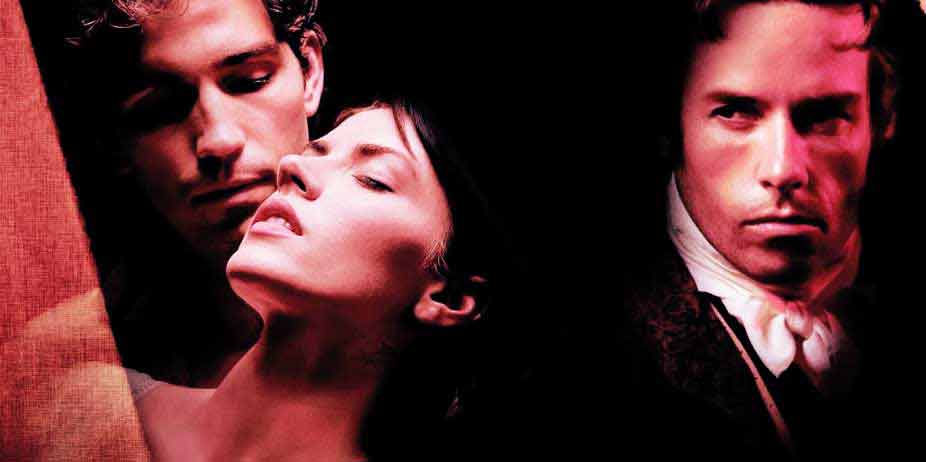
My complaints about the production itself are few. The costuming is beautiful and the ending climax just the sort of swashbuckling adventure I enjoy. The acting is sometimes stilted, the film has almost too languid a tone to it, the soundtrack is occasionally engaging, and the scenes in the prison crawl by at a snail's pace. It also borrows heavily on the plot points of another (and arguably better) swashbuckler, The Mask of Zorro, right down to Edmund's escape from the prison. My main problem is not with the film but the scriptwriter, who made modern changes to Dumas' characters: he turned Edmund and Mercedes's innocent relationship into a sexual one, and gave them an adulterous tryst in the last half. The priest respects the Christian faith, but he's the only one. Although Mercedes speaks at length about the mercy of God and His purposes, she is seen only seconds later engaged in an adulterous kiss and implied sex with a returned Edmund. That offended me grievously and is why this swashbuckler won't be added to my collection. It adds a dull ring to the closing pro-God statement: "This I promise you and God: All that was used for vengeance will be used for good." It also laces irony through religion as Edmund, laying beside a sleeping Mercedes, gazes up at a painting of Christ on the ceiling. Something to counter this is his slow transformation from desiring revenge to showing mercy; only when his hand is forced at the last does he take desperate measures to protect his family.
I have skimmed the content in favor of my issues with the spiritual side of the film, but will summarize briefly other areas of concern. There is virtually no language. The necklines are plunging but not so immodest as to become blush-worthy. Edmund and Mercedes are shown swimming in the moonlight and then kissing on the beach; but their bodies are blocked and it's a blurry, far-off shot. Their later scene of adultery is almost chaste, showing them laying next to one another in bed. Mondego makes it very plain he keeps a mistress. Violence amasses to several mildly graphic deaths by the sword (the blade is seen sticking through the body on both occasions), a non-bloody shooting, and prisoner abusee. Edmund is whipped many times by the prison guards. A tunnel cave in kills someone. The Count allows a man to be nearly strangled and provides a prisoner with a gun. After escaping the prison, Edmund drowns the warden. Mondego is shown several times in the act of murder without remorse. Prisoners eat dead rats.
Despite the disappointing adulterous element, The Count is a memorable experience and has many good points. Unfortunately, the lack of respect for faith, and nonchalant air of the leading roles toward immorality undermine its good traits.