Doctor Zhivago (2003)
A classic, famed love story set against a powerful backdrop with fascinating characters, events, and historical ramifications, Doctor Zhivago is ultimately about the loss of innocence. It is a memorable film with some thought-provoking conclusions but centers around an adulterous relationship. In the bitter cold of Russia, a man is carried to his grave. An unwelcome figure is present at his funereal, the lawyer who drove him to madness. Zhivago's only child is sent to live with family friends, growing up beside their daughter Toyna.
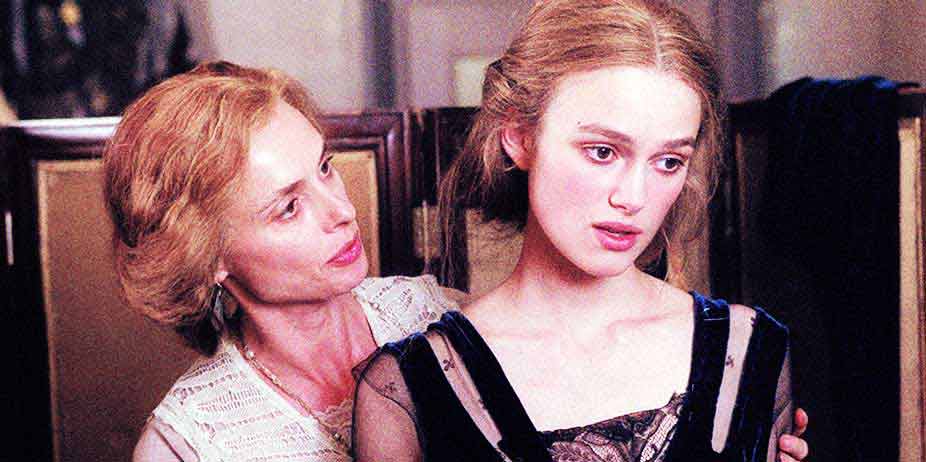
As the years pass, the two become best friends. Yury Zhivago (Hans Matheson) is attending medical school for the purpose of learning to bring comfort to human pain. His methods are experienced for a boy of his youth, and he rapidly gains the respect of his professors despite being a poet. Happily situated in St. Petersburg, one evening during a discussion on love with friends he sees a beautiful young woman in the window. Lara Antipova (Kiera Knightley) lives and works as a seamstress in her mother's low-grade dressmaking shop. Their company is often frequented by Victor Komarovsky (Sam Neil), who keeps her mother as his mistress. Fearing his attentions to her are waning, Amalia is distressed when he takes a sudden interest in her daughter. Lara has just turned seventeen. Dressing her up, giving her champagne, and ultimately charming her, Victor manages a seduction easily. Curious about the act of love, Lara submits to him... and begins a tumultuous relationship with a much older man. With this obsession grows hatred and soon she seeks to escape him by marrying her childhood friend Pasha (Kris Marshall). After her mother's near-suicide, Lara once again encounters Zhivago.
Putting the pieces together, he comes to hate his father's former lawyer. But the young people are drawn apart by circumstance... the invading Germans, Zhivago's happy marriage to Toyna (Alexandra Maria Lara), and Lara's escape from St. Petersburg. Victor has sworn he will track her down and has ruined her for anyone else. Her husband proves more dangerous than she first believed, taking to war in order to escape his raging fury over her past. In seeking to bring him home she will find Zhivago on the battlefield. Resistance keeps them at bay for a time but ultimately both will submit to the lure of temptation. The result is a wide scope of betrayal, broken hearts, and a tragic conclusion. While being melancholy and dark, there are obvious classic elements. First is the enormous scope of the production, spanning many years in Russian history during the German invasion and thereafter.
The love story is touching despite being amoral and the actors surprisingly accurate. Sam Neil is ideal as Victor Komarovsky. His natural charm and older appeal make it believable Lara would be seduced by him. Kiera turns out an excellent performance, as does Alexandra Maria Lara... but the production really belongs to Hans Matheson for playing the leading role with such open sincerity. Visually it's very stunning to look at and the setting seems to be authentic. The musical score is also remarkable. Because it's so tragic it opens the floor for debate. If Lara would have resisted Victor, her mother's heart would have never been broken, her innocence would have never been soiled, her husband would have never resented the upper class, which leads to his corruption and downfall. If Zhivago had kept strong, many lives wouldn't have been ruined. The film explores the downside of adultery but also romanticizes it. Zhivago feels a sense of grief in betraying his wife but after being kidnapped and forced to work on the front lines of the rebellion as a surgeon, returns to Lara instead.
For the first half these "elements" are handled modestly, though sex is still implied on a number of occasions. One of our first scenes with Zhivago involves his best friend quipping on his decision to be a doctor (because it's a good opportunity to see girls with their clothes off) and his ambition to lose his virginity. This leads to a debate between several young people on the subject of lovemaking. The topic is discussed in many following scenes, though never with overt graphic content. Lara agrees to sleep with Victor and although no activity is shown we still observe several scenes of implications. (Him getting dressed afterward with most of her bare side visible, her pleasured expression in a carriage, a door rattling when they're up against it.) Implications between husbands and wives usually cut out before becoming too explicit but there are two graphic love scenes in the second episode, one between Zhivago and Tonya, and one with him and Lara (including female nudity). I was shocked how graphic it was when most of the elements beforehand were handled with tact.
There is very little language and most of the violence isn't worth mentioning, but several disturbing themes do carry throughout. The film is set during the Russian uprising and many people are slaughtered. From a passing train passengers observe a settlement burned and bodies hanging from the house rafters. After witnessing the gruesome sight of a man with his leg and arm cut off (and hanging over a sign nearby), a man returns to his encampment, goes into the wagon where his children are, and we hear shots fired. He killed them all, then turns the gun on himself. Zhivago observes a wild man eating raw flesh off a man's body in the mountains. A boy is murdered in the woods. Lara is offered the chance for salvation... if she becomes Victor's mistress again. Zhivago never does return to his wife, knowing she is "better off without him." There is regret and the villain is worthy of remembrance, but because of the wrongful theology that adultery can be forgiven in the name of "true love" (lust) and how graphic the film becomes in its second half, Doctor Zhivago isn't worth discovering.