Dorian Gray (2009)
This remarkably intelligent drama features exquisite performances from Britain's leading actors while telling the cautionary tale in a way the original writer might not entirely approve of...
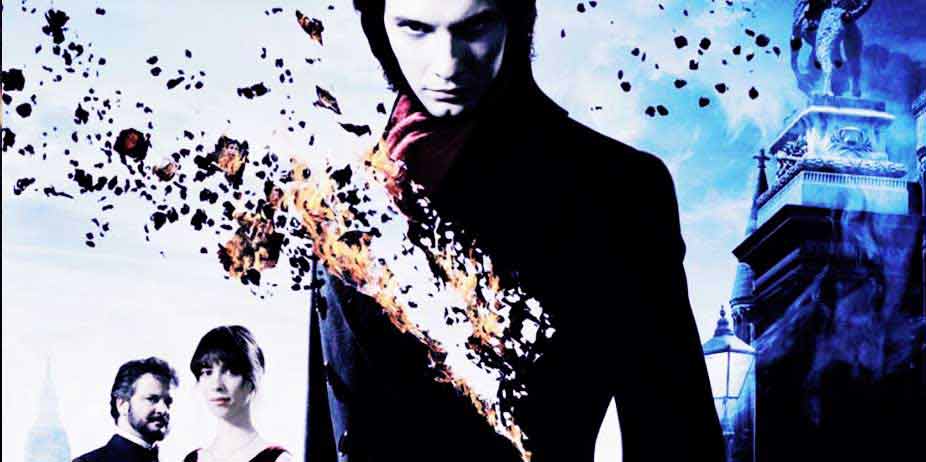
The Gray house holds many bad memories for Dorian (Ben Barnes) when he arrives in the wake of his grandfather's death. Unwanted and abused by his demented guardian, Dorian has not seen the interior since childhood and finds the memories that linger there too painful to contemplate. Performing in charitable piano concerts to put his mind off the past, he makes a friend in Basil Hallward (Ben Chaplin), an aspiring artist who wishes to capture Dorian's beautiful likeness on canvas. His accomplishment lures the attention of Lord Henry Wotton (Colin Firth), who is determined to make Dorian understand the full potential of such youth and beauty, and convince him that he can have, do, and become, whatever he chooses. His repeat attempts to corrupt the innocent young man play out against Dorian's fascination for the virtuous Sybil Vane (Rachel Hurd-Wood), an actress who spends her evenings reciting to a meager crowd in a second-rate theater.
When the painting is finished, Dorian is enraptured with its beauty and horrified to realize that one day he will have lost his youth and thus his power. In a moment of madness, he utters that he would sell his soul to the devil if it were possible never to age -- and a dark secret is born. In time, as Dorian manipulates, murders, and experiments with all the vices life has to offer, he discovers that his bargain holds true -- all of his terrible deeds are revealed on the painting while he remains unchanged. The story is haunting and not without immense tragedy and death, but running throughout are prevailing messages about good and evil and the consequences of sin. Dorian maintains a pretty face but his deeds reveal the utter corruption of his soul, a fact that begins to torment him in his older years when he sees another innocent woman (Rebecca Hall) and desires to begin his life anew -- but cannot, since the ghosts of the past continue to torment him. More than once he references his unhappiness and attempts to make amends, but in the end brings about his own destruction.
One of the few serious works of playwright and novelist Oscar Wilde, the story is not his usual satire of Victorian life but does contain elements that remind us of the absurdities of society and its multiple faces -- that Dorian conceals evil beneath a charming smile may be a condemnation of the double lives of society's "gentlemen," who have a beautiful wife and lovely children at home and spent their evenings with harlots. This is not a literal adaptation of the original since it does explore other themes and add secondary plots in an effort to make a stronger film, but in terms of being pure entertainment it succeeds. The performances are marvelous -- Ben Barnes proves he is a very capable actor and can work with a very demanding role. It is remarkable how one moment he can be grief-stricken and full of remorse and the second display a murderous rage or a gleam of diabolical intentions that will make your blood run cold. The secondary cast is all very good as well (including the smirking Firth), but the movie really belongs to its leading man and his slow descent into insanity.
The costuming is gorgeous and I was impressed with the panoramic camera work, which gives a real sense of character to the different manor houses involved. Stepping inside Dorian's home, we immediately sense a kind of evil emptiness to the place that convinces us dark spirits could very well dwell there. The painting is brilliantly done, shown now and again in various stages of decay while also making us wait until the very end before unmasking its true hideousness. It is a character in its own right.
Unfortunately, the movie also contains an enormous amount of objectionable material. Brothels featuring half-clothed women feature prominently in several scenes; further female nudity is revealed in several different montages of Dorian engaging in all kinds of debauchery (threesomes, S&M, etc). Content within these rapid exchanges is more graphic while other implications abound -- he ultimately seduces Sybil (her hand is shown covering her breasts) and becomes rather forward with several other women. It's implied that he seduces both a mother and daughter at a banquet. Dorian kisses (and seduces) Basil, and behaves forwardly with another young man. There are other same-sex kisses (mostly between women). The montages are revolting, as a scene of violence in which he stabs a man to death (blood spurts everywhere) and dumps his dismembered corpse into the river. Another man is hit and killed by a train; we see his bloodied body. Two men struggle and one attempts to strangle the other. The painting is crawling with maggots and dripping blood. Conversation revolves around a suicide and a girl becoming pregnant out of wedlock. We assume Dorian has made a pact with the devil and the painting comes to life with demon-like qualities.
What I liked about the film was how memorable and beautiful it was to look at, since almost every scene is dripping with artistic creativity -- cold shots of the docks at dusk or the pale colors of fabric in the background during important conversations. The characters are also very well defined and it illustrates Dorian's change in character very well. But I think the movie is almost like the painting in the sense that it has an outward beauty that conceals the ugliness within. I did not need to see drunken orgies to know what Dorian was up to, nor did we have to wander in and out of brothels and see him involved in various shenanigans to know he has lost all his former sense of morality. I think it is a film that could have benefitted from more restraint, because its messages could leave younger audiences much to contemplate.