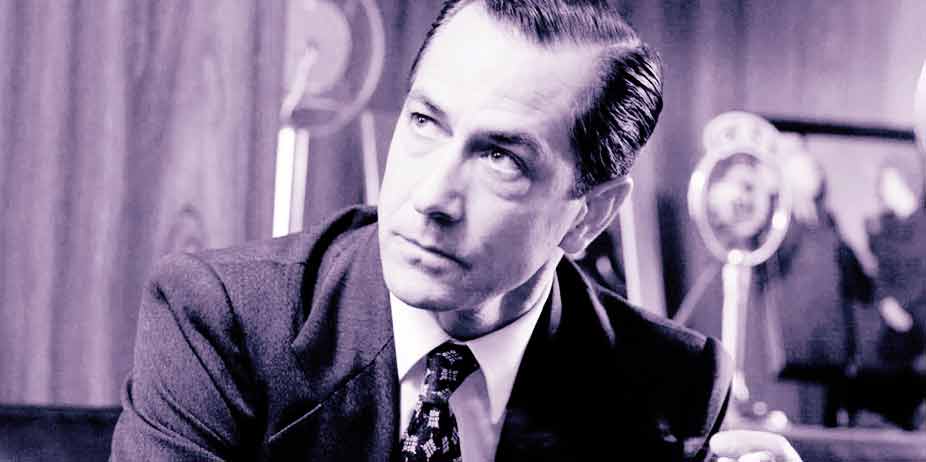
Good Night and Good Luck (2005)
There are very few biographical films that simply state the facts, but the Oscar-nominated Good Night, and Good Luck is a brand of unique storytelling in that it doesn't attempt to make a point so much as to reveal the truth about a man who risked everything to take a dramatic step forward in independent journalism. Edward Murrow, known most profoundly for his radio broadcasts from Europe during WWII, is the central focus of the film as it explores the issue of communist paranoia.
CBS Broadcasting is the foremost player in the phenomenon of television news. Its most respected journalist is Edward R. Murrow (David Strathairn), who leads a devoted league of reporters in attempting to tackle news issues that America cares about. Foremost in his profession, Murrow has become discontent with what is happening in America. The backlash of the world war has created paranoia toward the communist party in the central government, particularly Senator Joseph McCarthy. The senator has made rooting them out and exposing them his political tagline, and until know television journalists have avoided the topic for fear of being the next target of an investigation. Under the agreement of his friend and fellow producer Fred Friendly (George Clooney), Murrow decides to take a dramatic stand and report on McCarthy's invasion of personal rights.
The decision does not sit well with CBS President William Paley (Frank Langella), but never one for censorship, he allows them to air the half-hour segment. The phones start ringing off the hook the instant it ends, stirring up controversy in the public eye as McCarthy takes offense at their report. The film manages to capture the era very well. Unlike most bio films based in that era, it gives us a true depiction of what life was like. There's no excessive swearing, just chain smoking. The antiquated rules of the broadcasting network prevent married people from working on staff, forcing one happily married couple to keep their relationship a secret. Blended with genuine footage and some remarkably charming television commercials, the true power in Good Night, and Good Luck lies in its beautifully understated performances. They are quiet and genuine, a rarity in most modern productions.
At times I found it a little slow and thought some of the footage from the communist hearings might have been trimmed to avoid repeating information, and I was slightly disenchanted with the ending because not even a footnote at the conclusion let the audience know what became of Murrow, but the compelling nature of its focus kept me fascinated. It is shot in black and white with often unique camera angles and it truly feels as though you have stepped back in time, into the sound booth of the Columbian Broadcasting System. Depending on where you stand on the McCarthy issue, it might tread on your toes politically, but I did not sense an agenda so much as the intent to tell a story about courage in the face of a lion. McCarthy had the power of fear over those who dared conflict his views, and Murrow was the one man willing to stand up to him, at personal cost. (Though the movie didn't cover it, this completely destroyed Murrow's career.)
There is very little content in the film, either for authenticity to the God-fearing age or the desire to have it shown in public schools as part of journalism and history classes. Two uses of GD are found in the dialogue, along with scattered other mild profanities. A woman is shown in a modest slip. A man commits suicide by turning on the gas in his home. There is a lot of smoking present, used for historical authenticity. Murrow smoked constantly and eventually died of lung cancer. It's an interesting film if you are curious about the era, Ed Murrow, or the history of journalism. I had not even heard of it until a slew of awards programs listed it in their nomination categories. It's to its own determent that more of a fuss was not made over it, since it's one of the finest productions of the year.