Lorna Doone (2001)
Set against the lavish and lonely expanse of the moors, this epic of "star-crossed lovers, unbridled greed, dark secrets, and ruthless ambitions" is a stirring and intensely romantic story for both classes... those who enjoy the action and intensity of war and revenge, and lovers of period drama with wholesome messages and uplifting truths. The story is set in a time of uncertainty in England when the King lies on his deathbed and the future of the country is left in the hands of divided politicians. Some believe the rightful heir -- a Catholic -- should resume the throne while others fight for the king's illegitimate son, a confirmed Protestant.
This political struggle cannot quite reach into Exmoor where Jack Ridd and his family abide. Peaceful farmers, they endure the wrath of the nearby colony of notorious outlanders and lawbreakers the Doones. Lead by Sir Ensor (Peter Vaughan), the clan has been ejected from their Scottish homelands and forced to ravish and plunder the villages on the moor to survive. One day in a violent attack in the village, Jack Ridd is murdered and his son John swears vengeance on his father's killers. Mrs. Ridd (Barbara Flynn) takes the matter to Sir Ensor, but is shown no mercy. John, who must now provide for his family in his father's place, allows his temper to cool, and in the meanwhile makes the acquaintance of a mysterious maiden in the valley, Lorna. Bidding him to never again appear if he values his life, it is seven years before his return. The Ridds are happy and well settled, but still retain a violent hatred for the Doones, especially John's youngest sister Lizzie. During the celebration of John's birthday, tragedy appears in the form of his Uncle Rueben, flogged and badly beaten by the Doones, who robbed him of his purse and chased his pony across the moor. Rueben's daughter Ruth, a quiet but beautiful redhead with the capabilities of a nurse with a quiet love for her cousin John (Richard Coyle), attends to her father's wounds, and they take the matter to the judiciary, who refuses to act. Determined to take the matter into his own hands, John sets out for the valley... and again encounters the beautiful Lorna (Amelia Warner).
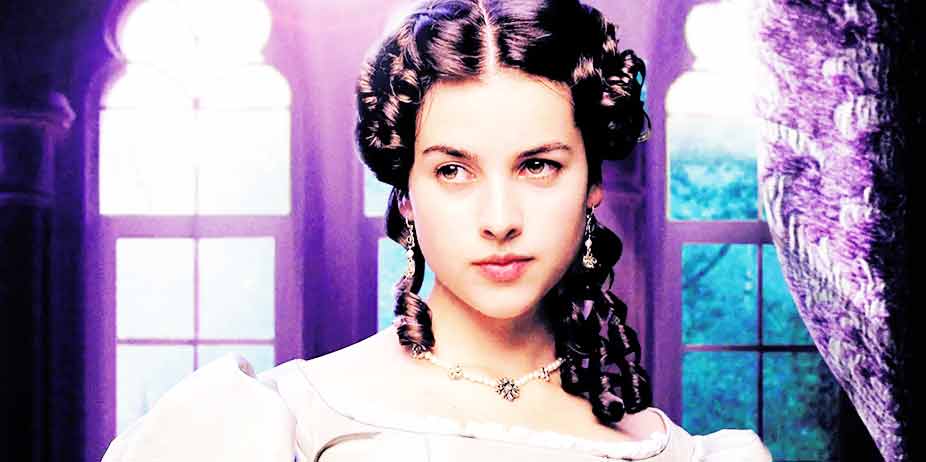
Strangely drawn to this beautiful dark-haired maiden, John is horrified to learn she's Sir Ensor's granddaughter, and heir to the Doone lands. Love blossoms even beneath the wings of hatred and he cannot prevent the inevitable. As their friendship grows and romance blossoms, so does the wrath and hatred between their families. Ensor has promised Lorna in marriage to her cousin Carver (Aidan Gillen), a cruel and rebellious young man. He seeks to possess her above all. Turbulent times lay ahead for the young lovers, as they chance fate, and defy all that they know. What will emerge from the nest of passions and desires, unbridled corruption and pure fate, is a story which has transcended through ages, a story of faith, courage, and determination. Paced on the violent backdrop of war and graced with a beautifully stirring soundtrack, Lorna Doone is indeed an epic... of passion, of destiny, and of romance.
This brilliant adaptation is bewitching and haunting from the first ominous introduction to the last closing sequence. The cast is an excellent collection of old faces and new, as well as with a score of brilliant and charismatic young British performers including eighteen-year-old Amelia Warner in the lead. The music above all is to be prized; I only wish it could be readily purchased. The haunting backdrop of the moors, blended with fine cinematography and first-rate acting, weave together a spellbinding tale of the power of love over hatred. Lorna stops John from killing Carver when he violently attacks the Ridd farm by telling him murder is wrong and if he did it he would be no better than his enemies. Her compassion and earnestly even to the dying Sir Ensor are praiseworthy. When an unexpected turn leaves her in a position worthy of greed she's happy in the simplest sense. John has a strict code of moral behavior, something he holds those around him to. In the final moments of the film, he extends his hand willing to help his sworn enemy. The bad guys are bad, and the good guys are good.
A beautiful story and one worthy of your attentions and time. Other romances rely on the sexuality of the leads to draw people in with torrid love stories and forbidden passions. War epics usually use extreme violence to drive the point home. Lorna Doone is a refreshing change from everyday fare and offers you a breathtaking glance into a bygone era to boot. An ideal treat for those who love romance, adventure, and a hint of mystery.
Sexual Content:
One forced kiss; references to wanting to possess a woman (sexually).
Language:
A few scattered profanities (including one muffled GD).
Violence:
A dozen people are shot in the heat of battle with very little blood; several struggles; Carver shoots someone at close range and threatens Lorna. A battlefield strewn with bodies; we see a bloodied stump briefly. A character commits suicide by allowing himself to drown in a bog; a beheading is implied but never seen.