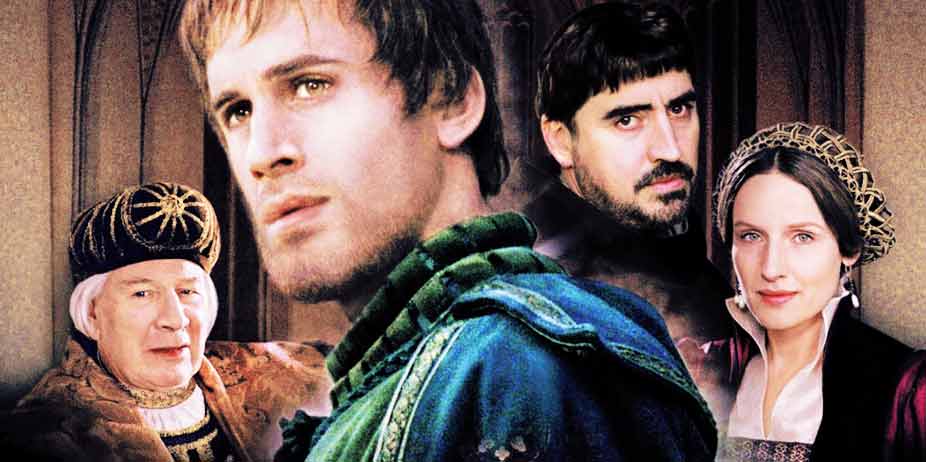
Luther (2003)
One of the most insightful, fascinating, and profound movies to come out in twenty years, Luther follows the turbulent struggle between the Catholic church and the country of Germany in the 1500's, revolving around the greatest religious liberator of the middle ages, Martin Luther. Historically correct in many respects, as well as a fantastically well-written epic with an excessively well-rounded cast, the film has many insightful glimpses into one man's journey toward his greatest triumph... the translation of the scriptures into German. It also has the most open and honest glimpse into salvation I have ever seen on the big screen.
Martin Luther (Joseph Fiennes) is apprenticed in the Church. Assuming the robes of a Benedictine, he seeks redemption through faith. Believing himself to be hopelessly flawed, he comes to doubt the goodness of God. His loyalties are torn between religious practices (based on the abuse he has observed in Rome) and true faith. The Church grows wealthy while its people starve, encouraging the peasants to give their last finances to purchase "indulgences" in order to rescue lost loved ones from endless Purgatory. Under the guidance of Father Johann (Bruno Ganz), Luther is sent to the university to study theology. What he finds instead are contradictions between scripture and the teachings of the Church. It's been determined by Rome that a magnificent palace honoring the bones of the disciples should be built. Monks sanctioned by the Holy Father are sent to sell a special blessing at a high price to assure the salvation of loved ones. (Thus ignoring the sacrifice of Christ and placing the soul of man on the signature of the Pope.)
Once learning of this heresy, Luther nails his assessment of the scriptures in contrast to the practices of the Church to the door of the local chapel, infuriating the clergy and gaining the interest of the common people. Luther's decision to stand up for what he believes will turn the church against him, divide the people of Germany, and eventually stir a rebellion to forever shape the foundations of the world. Leaving out some of the more controversial aspects of Luther's life, this film focuses primarily on his pivotal decision to defy the Catholic church, at the time the most powerful force in Europe. While running at a length over two hours, the film manages to cover a lot of ground in what seems a short amount of time. The plot is never sluggish or dull but does require careful viewing. A knowledge of Martin Luther and the German rebellion going in is beneficial but not necessary. There are minor plot holes, the worst of which being the failure to tell us who is responsible for the slaughter of peasants during the rebellion.
From a purely historical standpoint the film offers a shocking glimpse into the power and politics of the middle ages as Cardinals attempt to bend and wrestle princes and monarchs to their side. At one point Prince Friedrich (Peter Ustinov) remarks, "It repulses me how easily they thought to bribe me," after receiving an inexpensive "holy" gift from Rome in honor of his allegiance. This brings him to Luther's point of view by refusing to turn over Luther to the authorities, and going so far as to have his entire collection of holy relics removed from the house. There are many characters but each become familiar through their actions. One of the most understated but pivotal roles is portrayed by Jonathan Firth, as a Bishop involved in Luther's trial and excommunication. It's a shame Luther will not be recognized at the Oscars due to its strong religious tone. The actors all deserve nominations for their performances, particularly Joseph Fiennes, Jonathan Firth, and Peter Ustinov. The costuming is fantastic. The dialogue is also wonderfully rich with direct quotes from Luther's literary works.
Luther is rated PG13 for harrowing depictions of death. There is very little actual violence other than a mob throwing Benedictine monks down church steps but the aftermath of battle is brutal. Bodies line the streets, are shown hanging from trees, and darken the sanctity of the church. Early in the film we see a boy being cut down from the rafters after hanging himself. A monk passes his hand through fire in order to illustrate eternal hellfire. Peasants revolt, burning churches and looting abbeys, and are in turn slaughtered. Luther remarks angrily at one point there are "brothels just for monks!" in Rome and ignores the mild come-on of a prostitute after watching in disgust as one of the local priests follows another girl into a hovel. There's some very mild remarks on the "marriage bed," as well as a shot of Luther and his wife kissing on their wedding night. The film does contain mild language. Luther damns Satan's soul to hell numerous times (other references by the Church condemn Luther to the same fate).
At one point he calls Satan a "sh*t." He mocks holy relics, bringing up absurd things they sell for profit, including "milk from Mary's breast," and defining himself as an "ass" through which God might speak (in reference to Numbers 22:27-33). A crude drawing of a harp stuck up a priest's backside is seen very briefly. There's also a great deal of conversation about Purgatory, Hell, a soul being condemned for eternity due to suicide, and purchasing relics and blessings in order to release lost loved ones from darkness. The first fifteen minutes of film are full of this exploitation. This is all contrasted with true Christianity---that our soul can only be saved through the blood of Jesus Christ. The salvation message is given several times poignantly in varying lengths. Even if you're not religious, this film has a great deal to offer in the way of history and human nature.
The nice thing about Luther is the quality of the filmmaking. A lot of money was poured into this film. Not only will it receive greater recognition as a "serious" epic, it will also attract larger audiences due to the quality of casting, budget, and locations. Secular audiences will get an open story of salvation while enriching their knowledge of a pivotal time in German history. Christian audiences will have the pleasure of finally having a hero to root for in the cinema, a man who stands up for his faith against all odds.