 South
Riding (2011)
South
Riding (2011)
This miniseries serves as a powerful reminder to me not to anticipate anything based on a book you know nothing about. As it turns out, I would not like the book -- as I certainly did not like its adaptation.
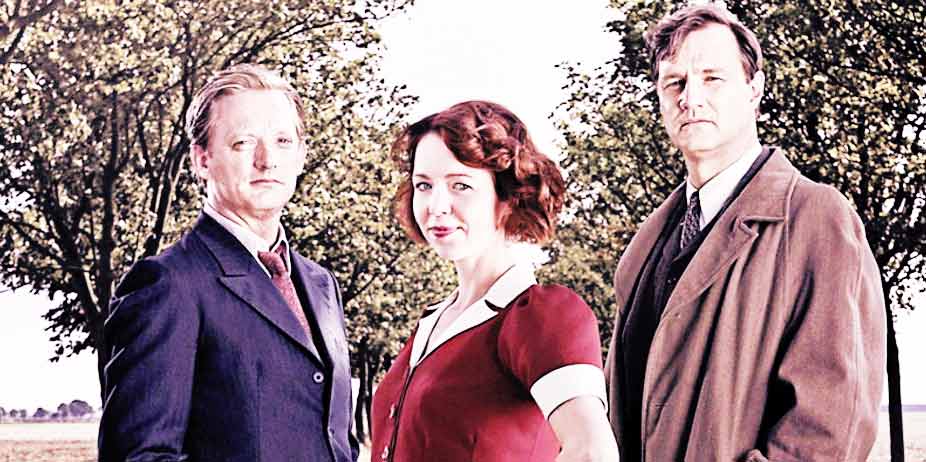
The small town of South Riding is facing big change -- the board is interviewing women for the role of headmistress at the local girl's school and the one applicant that stands out most is Sarah Burton (Anna Maxwell Martin). A spunky redhead who lost her fiancé in the last war and has developed a bit of an attitude since, she wants to change everything about the institution -- to improve it and encourage young female minds to strive for greatness. Her forward-thinking ways immediately starts her off on the wrong foot with Robert Carne (David Morrissey), a local landowner who is deeply in debt and in danger of losing the family home. He places all his hopes for survival on the sale of one of his horses but an accident leaves him bereft and in bad humor. His daughter Midge (Katherine McGolpin) is now old enough to attend school but her panic attacks and strange behavior make her a target of amusement for the other children -- all except Lydia (Charlie Clark), who takes her under her wing.
From an impoverished household, Lydia has earned a scholarship and Sarah is impressed with her poetry. Yet struggles and challenges lie ahead for all of them -- and also for a minister in town whose philandering with a local girl has gotten him into trouble. I'm not sure what I expected going into this but... it was not what I got, an immoral and mostly depressing look into the lives of a bunch of miserable people. None of the characters except perhaps the children and Mrs. Beddows (Penelope Wilton) are very likable and just when we start to warm up to Robert, we learn the truth about one of his former actions and our affection fades. Part of the problem is condensing a reasonably long book into a three hour format -- everything feels rushed and we are not given much time to properly acquaint ourselves with and become fond of the characters, or to feel the romantic tension between them. There is no time nor inclination to emotionally connect with them, so when tragedy strikes in the final hour I did not much care.
Poor pacing aside, in terms of filmmaking alone it is very well done with the perfect cast. Martin is a terrific leading lady, although I much preferred her character in Bleak House, and she has nice chemistry with Morrissey. There are a few surprises, twists, and turns as the story unfolds and the representation of a nation still suffering the effects of one war about to head into another are keenly felt. The costuming and set design are lovely, and the girls turn in terrific performances. But therein enters the problem of a total lack of morals. Our introduction to the parish minister is him gazing lustfully at a woman in the congregation; five minutes later we are witnessing their sexual tryst in a back alley, after which he profusely apologizes -- and hands her some money. Even though he continually says it's wrong, he keeps going back to her (and away from his banal wife). He is soon being blackmailed by someone who knows, and becomes involved in an illegal money making scheme in order to keep it quiet. In the second episode, we see a flashback in which after finding his wife in her nightgown in the presence of several young men, her husband enters a rage and forces himself on her. Knowing a man is married, Sarah invites him to her hotel room -- he comes, but they wind up not sleeping together (not by their own choice).
Thematic elements include a child having routine panic attacks, a woman doing insane things and winding up in a mental institution, and two instances in which horses die -- one is shot (unseen) and another falls to its death when a cliff crumbles. A man is mentioned as having been killed and the village speculates on whether or not it was a suicide. There is a mild amount of swearing, mostly in British terms (bloody, buggar, and so forth). Liberal political views are present in the actions of the town committee concerning public housing and for understandable reasons, Sarah is outspokenly anti-war. I wish I could have enjoyed this miniseries more but it disappointed me more than it entertained me, and seems to indicate a downward trend in Masterpiece Theatre. Its moral standards were never high, but its Contemporary Collection has adopted contemporary morals as well and when you add it to rather shoddy writing and thoroughly unlikable protagonists, it pales in comparison to its earlier triumphs. Will we ever again see productions up to the standard of Wives & Daughters that everyone in the family can enjoy? I don't know, but I hope so.