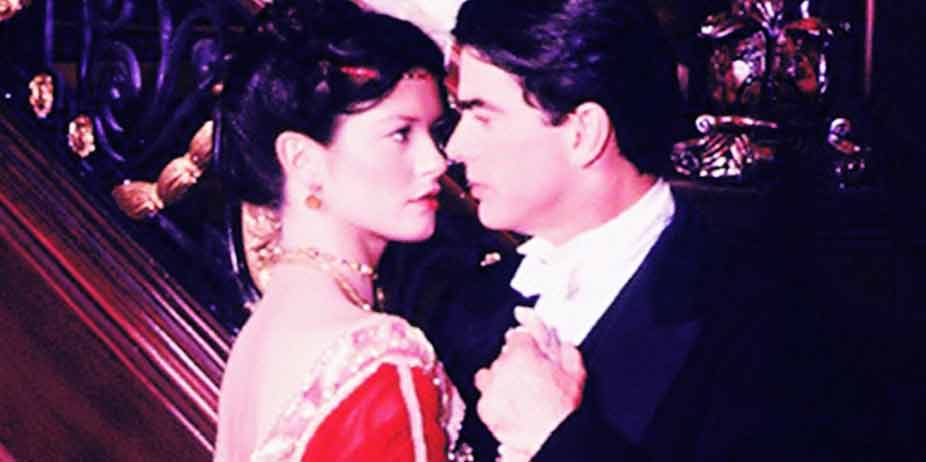
The Titanic (1997)
It's been a hundred years since the mighty White Star Liner sank to the bottom of the sea in a freak collision with an iceberg on its maiden voyage. One of the most fascinating of history's mysteries, the RMS Titanic has fascinated readers ever since. With so many self-proclaimed "experts" on the sinking, it is therefore unfortunate that most filmmakers choose to do little or no research, making their productions laughable in their melodramatic presentation of events.
Just days before Titanic is due to set sail amidst great fanfare, emotionally conflicted Alice Cleaver (Felicity Waterman) seeks a new position with a wealthy family. Extremely close-mouthed about her past but with good references, she is given charge of their two children, a little girl and a baby boy still in nappies. Plagued with nightmares and guilt over the death of her own child, Alice is disconcerted about their sailing. The night before the ship is due to depart, pickpocket and general thief Jamie Perse (Mike Doyle) steals a third-class ticket. His shenanigans are taken note of by Simon Doonan (Tim Curry), an officer on board. Also a thief, Simon convinces Jamie that together they can rob the first class blind and escape into New York undetected. But Jamie is sidetracked by the presence of the beautiful and demure Christian girl, Bess (Harley Jane Kozak).
Among the first class passengers is Isabella Paradine (Catherine Zeta-Jones), mourning the recent loss of her aunt and returning home to her wealthy husband and daughter. She is horrified to learn that former lover and successful businessman Wynn Park (Peter Gallagher) is on board. While she attempts to evade temptation, the ship sails toward its destiny with a host of now-famous individuals on board. Molly Brown. Mr. and Mrs. Astor. Captain Smith. Charles Lightoller. The film would have been lovely had it paid more attention to the true facts. For anyone who has studied the ship, the errors are glaringly obvious. Some of them were duplicated in the Cameron film that came out a few months later, such as Murdoch killing himself, and the gates between classes being locked. Others are simple mistakes, such as the weather at any given time or the events that transpired in first class. Once again, the depiction of Charles Lightoller is excessively harsh, Bruce Ismay is turned into a careless monster, Captain Smith gives up too soon, and in one of the film's most ridiculous scenes, the officers stand around blaming one another for what happened.
Even forgiving these faults, the miniseries is interesting and does at times have a reasonable plot. Much of it is contrived and forced, but the performances are generally good and one does become attached to the characters. I did appreciate much about the film, such as its glimpse into the events that transpired on other ships during the distress signals (particularly the Carpathia) but the film foundered in its depiction of the officers. Both an entertaining and interesting take on the events that have transfixed audiences for generations, Hallmark's miniseries must not be taken as historical fact, but is nevertheless thought-provoking, for it shows us once more, profoundly, that pride cometh before a fall.
Sexual Content:
An adulterous affair (kissing, caressing, and a sexual scene in her stateroom, with the typical "morning after" shot). A girl is brutally and graphically raped.
Language:
Mild profanities.
Violence:
None other than disaster-related aspects.