The Thorn Birds: The Missing Years (1996)
The mesmerizing story of the ruthlessly ambitious Father Ralph and the young woman who won over his heart made the original Thorn Birds one of the most popular miniseries of all time. Years later, in an effort to cash in on their initial success, this follow up production was made that has a few memorable moments and some great scenes of emotional complexity, but overall manages to lessen somewhat the impact of the first installment. If you are a fan of the original, you may or may not enjoy the sequel.
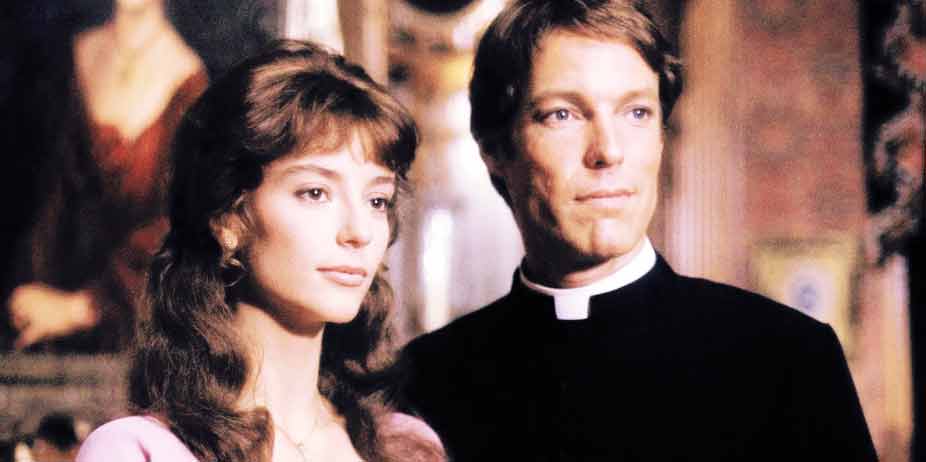
A number of years has passed since that impassioned weekend on the little island where Meggie (Amanda Donohoe) and Father Ralph (Richard Chamberlain) consummated their love -- against the laws of the church, their own moral convictions, and to the endangerment of his reputation as a priest should such a thing become known. Ralph's son Dane (Zach English) is now a strapping little boy with an "unholy" interest in the clergy. His greatest ambition is to become a priest when he grows up, much to his mother's distress (having lost Ralph to the church, she is not about to sacrifice her son as well). Dane is the one source of support and comfort to his older sister Jessie (Olivia Burnette), who, being the daughter of a scoundrel that Meggie left after emotional neglect forced her to admit her decision in marriage was not a wise one, is much ignored by her mother. Jessie is rather oblivious to what is transpiring around her -- namely, that Australia is facing one of its worse droughts, and there is danger of the sheep ranch going under because of it.
Many miles away in Rome, memories of Australia are far from Cardinal Ralph's mind. Italy is torn between Hitler and America's armies, and thousands of Jews have fled to the church for salvation. Against the wishes of various members of the Vatican, Ralph has concealed a number of Jews in a nearby set of catacombs. His reckless behavior and his misuse of funds for their safety and transport to America force his superior to take measures to protect him from backlash. Knowing that Drogheda is in need of his attention, Father Angelo forces Ralph to face the past in sending him to Australia, not only to check on their investments, but also raise support for taking in displaced Jews. His arrival coincides with the return of Meggie's husband Luke (Simon Westaway), who has learned of the existence of Dane and wants a hand in raising "his son." For a short time, Meggie attempts to make their new family work, but it soon becomes apparent that Luke cares nothing for her, only for having possession of Dane. Ralph's presence ignites a bitter feud between Meggie and Luke that leads to an angry custody battle over Dane, who is torn between his desire for a father, and his wish to become a priest -- something Luke adamantly forbids.
All of this unfolds over the course of three hours, and in some respects it is a good story, providing you do not know the context of the original characters. Thorn Birds and The Missing Years do not mesh well, because it provides several dramatic contradictions. In the first (and far more memorable) production, one of the most poignant moments is Ralph finding out that Dane is his son, late in his life and after it is too late for him to become a father figure. The entire premise was that Ralph gave up love and family to pursue a career in the church -- an often ruthless devotion that brought him eventual unhappiness. This production undermines the impact of that scene because it implies that Ralph was prepared to leave the church for Meggie, and it was only her that forced him to return (unlikely, given the original Meggie's possessiveness of Ralph, and her ruthless determination to "defeat" God and the Church that had taken him away from her). Meggie never returned to Luke, and never looked back. Here, however, she is swayed for a short time by his flattery and involves Ralph in a courtroom battle for Dane -- a good plot point, but one that takes away much of the emotional impact of believing Ralph had almost nothing to do with his son as he was growing up.
I am a fan of the miniseries, because it paints a realistic and haunting image of human pursuits and mistakes. All of the characters are complex and fascinating, from tempestuous Meggie to the driven Ralph and most especially, Mary Cleary, the woman who orchestrated the entire emotional entanglement by throwing them together. The Missing Years is a movie I don't quite know what to make of. On one hand, I loved the scenes of Ralph during the war. I thought that was very much in character and it was exciting to watch it play out against the bombings in Rome. I also experienced the familiar rush of anxiety and happiness at seeing Meggie and Ralph in the same room, but the film had moments where it felt over-long (too much time was spent focusing on Luke, and Meggie's mother), and when Ralph and Meggie wound up trapped overnight in a cabin together, I knew what was coming. The inevitable, naturally, only this time around it was far more graphic and even included brief female nudity. There are a handful of profanities, and an instance where a man slaps a woman, and she falls over a railing, suffering a miscarriage.
The new cast had a lot to live up to, and most of them did fairly well. Chamberlain of course is the original Ralph, and his performance is magnificent. I doubted Donohoe for a time but eventually came to accept her as Meggie (it did not help that the characters were written so differently). The biggest adjustment for me was Julia Blake as Meggie's mother. She played it so differently, so much warmer, than Jean Simmons that I never quite believed she was the cold, emotionless Fee. That being said, the bottom line is this: The Missing Years is decent entertainment if you can suspend your disapproval at the door. The premise still remains offensive, that a priest would conduct a sexual relationship that would not shame him enough to retire from the priesthood, or seek to placate his conscience through marriage. Paul said that it is better to marry than to burn eternally with lust. It's not a film I would recommend unless you are a fan of the original and willing to overlook the changes in character, but even then, it is nowhere near as impacting as the miniseries.