 Wings of the Dove (1997)
I am not an enormous fan of Henry James' works but this story has a particular resonance with it, in how ambition and greed can corrupt love. Most of it I much enjoyed but the last ten minutes ruined it for me.
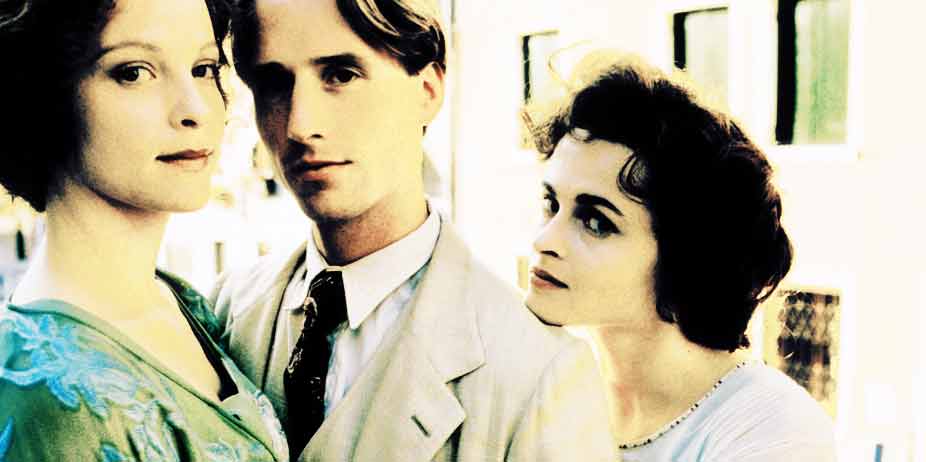
When Kate (Helena Bonham-Carter) is adopted by her wealthy aunt (Charlotte Rampling) and promised to be made an heiress, it comes with one condition: that she ceases her romantic attachment with the penniless journalist Merton (Linus Roache). The ambitious young man hopes to marry Kate one day but she cannot walk away from her potential inheritance, because it means potential disaster for her impoverished father (Michael Ganbon). The lovers continue to meet discreetly and discuss their lack of a future, while Kate is publicly courted by Lord Mark (Alex Jennings), an aristocrat her aunt hopes will make Kate a fine husband. Then Millie (Alison Elliot) enters their lives. The beautiful, sweet, innocent American heiress immediately becomes fast friends with Kate, and develops a bit of a crush on Merton.
Just when it seems life cannot be more ordinary, a rumor reaches Kate that may mean happiness for them all, but in doing it she will betray her friend's trust and must convince Merton to give away his heart, even in fraud, to someone else. For the most part, the film is a glorious accomplishment. It is beautiful in almost every frame, in the streets of Venice and the lovely costuming, but it is the performances that really stand out. Helena got an Oscar nomination for this role and it is not difficult to see why, because so much goes on behind her eyes and in her expressions that we do not need her to share her thoughts -- we know them instinctively. Alison is a lovely contrast, her character simple and sweet and understated. There are a lot of wonderful moments and settings, but it is also a story of ultimate sadness and heartache. I like the lesson involved about allowing evil into our lives, and how it can corrupt even something as pure as love. In essence, what Merton and Kate become involved in with Millie makes it so that their own affection for one another wanes out of mutual contempt and self-loathing.
I liked the film's depiction of female friendships. The two women are affectionate with one another and very close, almost like sisters at times -- but there is no undercurrent of eroticism. It's a beautiful friendship while it lasts, and a reminder that we need one another and there is no shame in being close friends. But I did not enjoy the graphic sex scenes.
Sexual Content:
Two sex scenes (one of them very graphic, and containing
nudity). One scene lasts a long time and we see Helena naked
from every angle. Another far-off, shadowy scene has them
doing it against a wall in the sewer, fully clothed. Early
on, while kissing, Merton's hand slides down onto her
bottom.
Language:
Thematic elements include a death and a man smoking in an
opium den.