The Wyvern Mystery (2000)
Excellent gothic thrillers are hard to find. They're best appreciated on the page, since in translation to screen they often turn out gruesome images of death and horror that overshadow the anticipated happy ending. Good examples of the genre are found in Jane Eyre, The Woman in White, and other stories which place the heroine in some peril in a sinister old house. Usually stories of this nature involve a mysterious unknown woman, and a hero/villain whose allegiance you cannot discover until the end. The Wyvern Mystery is no exception. Not only does it carry all these elements, but many more. The story is reminiscent of Bronte in many respects, but also carries a certain clout of its own. Based on a novel by the controversial J.S. Le Faneu, the story is melancholy and gothic to the extreme.
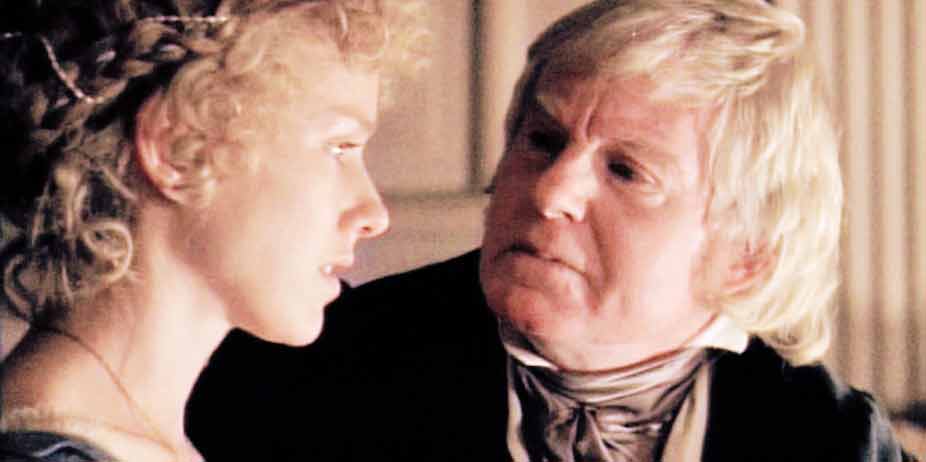
After precipitating the death of a tenant with whom he has been feuding, Squire Fairfield (Derek Jacobi) brings the man's young daughter to live in Wyvern Manor. Over the years, Alice grows into a beautiful and accomplished young woman believing her guardian to be a former close friend of her father's. When reaching a marriageable age, Alice (Naomi Watts) realizes the squire's attentions are no longer honorable and seeks to run away with his elder son Charles (Ian Glen). The Fairfield heir is a solicitor and often away for months at a time, both to escape his father's bad temper and seek his fortune. Unknown to the squire the young lovers have an understanding. Fairfield has proposed marriage to his ward, and Alice does not wish to refute him. With the assistance of Henry (Jack Davenport), Charles' much-berated younger brother, they escape the house in the middle of the night. Knowing the squire's rage will be inconsolable, they hastily wed and remove themselves to Charles' lonely estate, telling the servants to inform visitors they are abroad.
The house is very old and sinister, haunted by the ghosts of past misdeeds. The servants speak of former atrocities within the four walls, most of them surrounding a horrible tale of a woman drowning her child in a set of rooms in the upper corridor. This series of chambers fascinates Alice. The walls have been painted black, dust lies inches deep on everything, and yet the scent of laudanum remains, hinting they may have been recently occupied. Their hasty marriage nevertheless has presented some problems, primarily financial. In fear of the squire's wrath, Alice is reduced to almost a shut-away. There are also startling implications of guilt on her husband's part. Cryptic late-evening discussions with Henry are held in the garden. Mentions of an old soldier's feared return.
The screenplay, while at times being overly melodramatic, is very apt at setting a mood. The darkened corridors of the old manor house, the naturally frightened, pale features of Naomi Watts (who bears an uncanny resemblance to Nichole Kidman in The Others), even the music lend itself to pure atmosphere. It's gothic thriller at its best, though my initial viewing perceived it as rather morbid. With a second viewing you pick up on many of the subtle clues woven throughout the screenplay, and come to appreciate it more as a good example of the genre. I found myself surprised at several of the plot twists as they unfolded. Some pieces of the puzzle are easily solved, others demand more careful scrutiny. Visually the film manages to be both beautiful and grotesque, going in for light, airy shots as well as morbid close-ups and haunting images of death. A central character has a terrible scar across her cheek, and one blind, milky-white eye. The camera in particular loves to linger on her disturbing countenance. There are also some creepy nightmares.
My first time viewing The Wyvern Mystery, I was put off by the darkness of the production. I felt they went a little too far in some respects, particularly concerning the morbid atmosphere of the piece. The emphasis on blood seemed reminiscent of the author's better-known vampire stories. But with a second watch, I found myself more enthralled with the tale itself. I've come around to enjoying it as a mystery fan. Both a fascinating study of human nature and supernatural fears, lovers of the genre will be pleased. The photography is brilliant and the sinister music sets a perfect mood. It opens with mild romance, goes through several tragedies, and ends on a sober but happy note. In the meantime, the audience has been taken on a terrifying ride.
Sexual Content:
Sexual
content intrudes on a couple of occasions. I was too forthcoming in
breathing a sigh of relief the actual wedding night ended before more
than kissing was observed. Several scenes later we see the couple
briefly entangled in the sheets together; there's no question what's
going on. After having a violent quarrel with his wife, Charles comes in
to apologize and kisses his wife's breast through her open nightgown.
The two passionately kiss before the screen fades. With the squire's
proposal, he also kisses Alice, pushing her down against the divan. She
hastily excuses herself and goes to cry in the garden.
Language:
There is only occasional mild language with
one use of GD, a few profanities, and an instance where the Squire calls
Alice a "little whore" for refusing him.
Violence:
Fairfield often takes out his verbal temper on
his son Henry, who intimates he is often berated. "One day," he
warns soberly, "I may not be able to stay my hand." There's a lot of implied violence, from the
squire being struck to the ground by one of his sons in a fit of rage to
the mad woman leaving a trail of blood in the basement after assaulting
her jailer with a broken bottle. (Actual event remains unseen; it's
implied the jailer was regularly beating her with a walking stick.) This
same woman attempts to kill Alice several times, wielding a knife in her
room, trying to whip her with chains in the cellar, and nearly
strangling one of the maids in search of information. At the end the
central villain is rewarded with her wrath. We hear terrified screams
from inside the manor house and see a candelabra dripping with blood, as
well as a striking shot of the woman seated gracefully before the
fireplace, her gnarled fingers red with her foul deed.